REVIEW · SINTRA
19th Century Photography Experience
Book on Viator →Operated by Five Historic Photography Studio · Bookable on Viator
Sintra has a special talent for turning history into something you can touch. This 19th-century photography experience recreates the wet-plate collodion process (invented by Frederick Scott Archer in 1851) so you can watch how a tintype portrait actually comes to life. The result is a real physical keepsake, not a screen image.
What I like most is the hands-on look at the development in the dark room under safe red light. You get a step-by-step introduction to how the collodion method works, and you see the chemistry do its magic. Second, I really like that you finish with an authentic tintype made during your session, offered in three size options and packed for safe handling afterward.
One consideration: this experience is not wheelchair accessible. If mobility or standing time is a concern, it’s worth planning carefully for your own comfort before booking.
In This Review
- Key things to know before you go
- Why wet-plate collodion in Sintra feels like real history
- FIVE HISTORIC PHOTOGRAPHY STUDIO: antique gear, period props, and a real workshop feel
- The portrait session: props, exposure time, and getting your face right
- The dark room moment under safe red light
- Your tintype keepsake: size choices and the one-hour wait
- Price and value: what you pay for and what costs extra
- Best fit: who should book (and who should rethink)
- If you love Sintra, this is a smart contrast plan
- Should you book this 19th Century Photography Experience?
- FAQ
- How long is the 19th Century Photography Experience in Sintra?
- What photography process will I experience?
- When can I collect my tintype plates?
- Are there different portrait sizes?
- Is the experience wheelchair accessible?
- Do I need to pay extra for digital copies?
Key things to know before you go
- Wet-plate collodion (1851) with a tintype portrait using historic methods
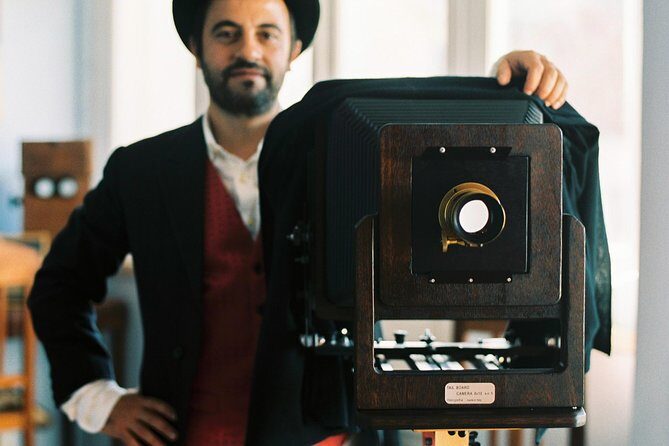
- Private session at FIVE HISTORIC PHOTOGRAPHY STUDIO with antique cameras and period furniture
- Choose among three tintype sizes for your final portrait
- Watch the full development in the dark room under safe red light
- Your aluminium tintype plates are ready about one hour after the shoot starts
- Digital copies cost extra (€5 per booking), but the physical portrait is included
Why wet-plate collodion in Sintra feels like real history
Wet-plate collodion is one of those processes that sounds like a museum label—until you see it in action. The idea is simple but dramatic: the plate gets coated and exposed, then it must be developed immediately. That “must happen fast” rhythm is exactly why it feels so old-school and so human. You’re not just watching a demonstration. You’re working within the pace of the 19th-century workflow.
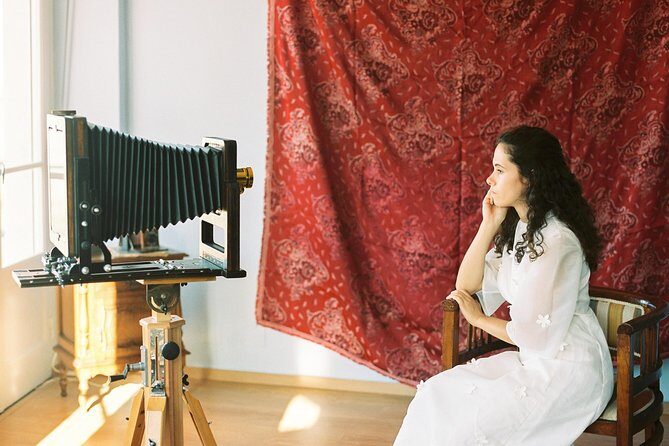
Sintra is a great place for this because you can feel the romance of the setting. After all, you’re stepping into a studio space equipped with antique cameras and period furnishings, where the hosts walk you through how photography used to be made. The experience also includes an intro to the collodion process, so you’re not left guessing what you’re seeing.
Other photography tours in Sintra

FIVE HISTORIC PHOTOGRAPHY STUDIO: antique gear, period props, and a real workshop feel
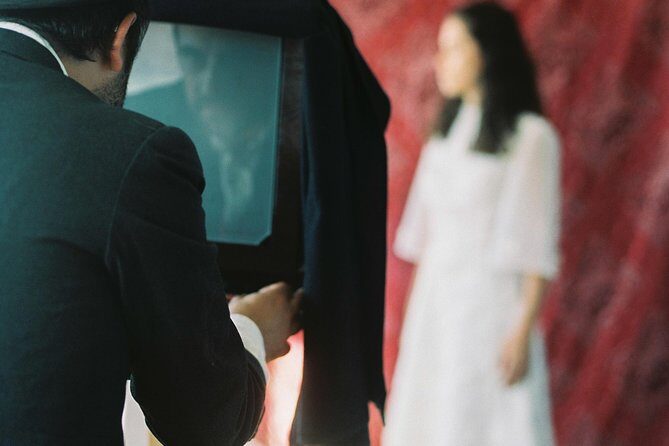
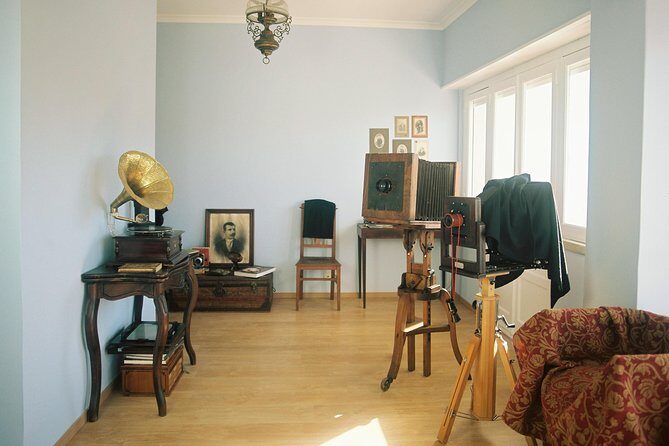
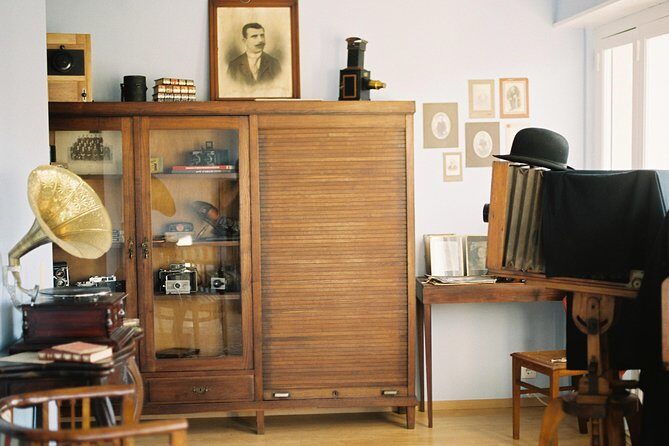
The session takes place at FIVE HISTORIC PHOTOGRAPHY STUDIO. This isn’t just a corner with a camera and a backdrop. It’s set up like a working time capsule: antique cameras, older-style furniture, and reference material about 19th-century photography. That matters because it shapes your expectations. You’re entering a space where the craft and the look go together.
A nice practical touch is that period clothing and accessories are available for optional use. If you don’t want to bring anything, you still get the chance to dress the part. If you do have your own outfit you want to wear, you can use what you brought, then top it off with the studio’s hats and props to match the era.
The studio also supports a private session, meaning it’s only your group. That’s a big deal here. Wet-plate collodion is a delicate, step-by-step process, and private time helps you get your questions answered without feeling rushed.
The portrait session: props, exposure time, and getting your face right
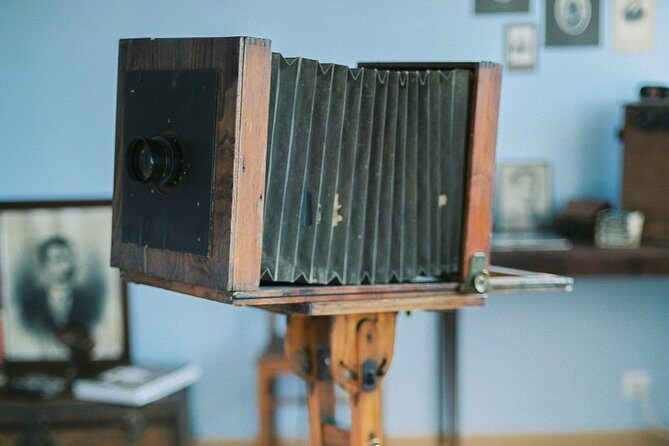
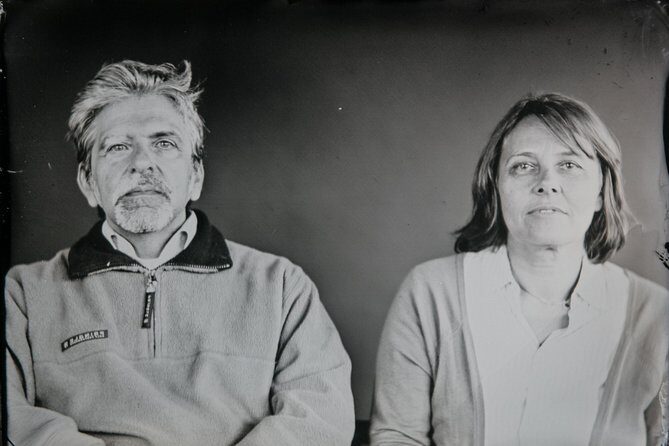
Your portrait is made using wet plate collodion on an aluminium tintype plate (often called a tintype). In your hour-long experience, the hosts guide you from setup into the actual capture. You’ll have a chance to choose from three different portrait sizes, which is worth thinking about before you arrive. Larger formats tend to show details more clearly, while smaller options can be easier to handle and store.
One thing I’d plan for: the exposure time can go up to 10 seconds. That’s not “blink and you’ll miss it.” You’ll need to stay still and breathe steadily during the shot. If you’re visiting with kids, this matters a lot. The experience is not recommended for children under 6, largely because that stillness requirement can be tough for very young travelers.
Also consider your comfort with posture. Tintype portraits typically ask for a composed stance for a short moment. You don’t need to be a model, but you do need to cooperate with the process. If you’re the type who hates posing, this might feel awkward at first—then you’ll realize that the awkwardness is part of what makes it memorable.
The dark room moment under safe red light
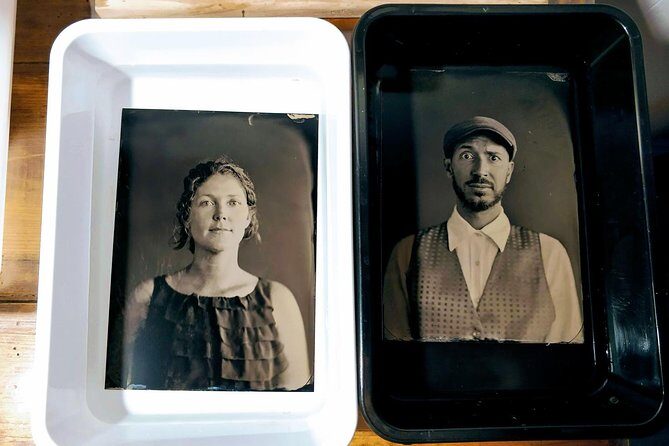
The headline for many people is the dark room development, and for good reason. Here, you don’t just get a final photo and leave. You follow the hosts to the laboratory/dark room to see the full development process. The development happens under safe red light, which keeps the process readable and watchable without ruining the chemistry.
This part is often where the experience turns from interesting to unforgettable. During development, the image appears in a way that feels almost magical—not because it’s spooky, but because it’s physical and immediate. Reviews specifically mention the thrill of watching the negative photo come to life in front of you, and that the moment can be filmed. Even if you don’t plan to record, it’s smart to keep your phone ready so you don’t miss the timing.
The broader value here is understanding photography as craft. In the digital age, you get an instant result and move on. With wet-plate collodion, you see the connection between steps: why timing matters, why the plate has to be treated carefully, and why the dark room is its own mini-stage of the process.
Your tintype keepsake: size choices and the one-hour wait
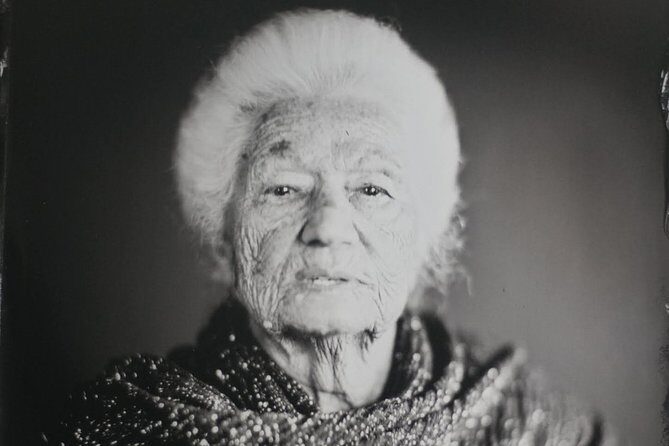
After the shoot starts, your aluminium tintype plates are ready about one hour later. That timing affects how you plan the rest of your visit in Sintra. If you’re hopping between sights, build in enough slack so you can return to collect your portrait without stress.
The physical artifact is a major part of the value. You’ll receive the photograph in a nice box for protection, plus guidance on how to care for it. That packaging and care advice matter because tintypes are meant to last when handled properly. It’s also a collectible format in a way that modern prints rarely are. You can keep it on your shelf, tuck it into a journal, or show it as proof that you really did something tactile and different.
One practical tip: treat your tintype like a real keepsake. Don’t stack it loose with other items. Use the box when you’re not displaying it, and follow whatever care notes you’re given at pickup.

Price and value: what you pay for and what costs extra
At $48.06 per person for an approximately one-hour private session, the price is doing a lot of work. You’re paying for:
- A portrait made on authentic wet-plate collodion/tintype chemistry
- The full explanation of the collodion process
- Time in the studio plus the dark-room development walkthrough
- Optional use of period clothing and accessories
- A finished physical tintype in protective packaging
The only clearly listed extra is digital copies of the photograph (€5.00 per booking). If you love posting online, that add-on can be worth it. If you mostly want a real souvenir, you can skip it and let the tintype be the point.
In plain terms: you’re not buying a quick photo prop. You’re paying for an authentic process and a keepsake that exists because you took part in it.
Best fit: who should book (and who should rethink)
This is a strong choice if you want something more personal than a standard guided walk. You’ll like it most if you:
- Enjoy hands-on activities and classic crafts
- Like learning how things work, not just seeing a result
- Want a physical souvenir with story and texture
- Prefer smaller settings, since the session is private
It may be less ideal if:
- You use a wheelchair or need step-free access, since it’s not wheelchair accessible
- Your group includes very young children, since exposure time can reach up to 10 seconds
- You strongly dislike posing or holding still for a short moment
One more quick mindset note: the “win” here isn’t speed or convenience. The win is participating in a slow, deliberate craft where the result is unpredictable in a human way—in a good way.
If you love Sintra, this is a smart contrast plan
Sintra often pulls you toward castles, palaces, and views. This experience gives you a different kind of memory. Instead of a postcard angle, you bring home a portrait you can hold. It’s also a great way to add something creative to a day that might otherwise be purely sightseeing.
The studio is in the town area near public transportation, so you can usually fit it into a sightseeing loop. Still, plan for the pickup timing (about one hour after the shoot starts) so you’re not scrambling.
Should you book this 19th Century Photography Experience?
I’d book it if you want a real, one-of-a-kind keepsake made through a historically accurate process, and if you’re comfortable with the idea that portrait photography requires patience. The dark-room development segment is the kind of experience you’ll remember long after you forget where you ate lunch.
I’d skip it if accessibility is an issue for your group or if you’re traveling with young kids who may struggle with the up-to-10-seconds exposure requirement. If that’s your situation, you’ll probably feel the stress instead of enjoying the craft.
If your goal is a meaningful Sintra memory with real tangibility, this experience is an easy yes.
FAQ
How long is the 19th Century Photography Experience in Sintra?
The experience runs for about 1 hour.
What photography process will I experience?
You’ll create a tintype portrait using wet plate collodion, an early photography process invented in 1851.
When can I collect my tintype plates?
Your aluminium tintype plates are ready about one hour after the shoot starts.
Are there different portrait sizes?
Yes. You can choose from three different sizes for your tintype portrait.
Is the experience wheelchair accessible?
No. The experience is not wheelchair accessible.
Do I need to pay extra for digital copies?
Digital copies are not included. They cost €5.00 per booking.