REVIEW · SINTRA
Sintra Walking Tour – The Portuguese Fairytale
Book on Viator →Operated by Hi Lisbon Walking Tours · Bookable on Viator
Sintra feels like a storybook town. This 2.5-hour walk links major sights with the ideas behind them, from Quinta da Regaleira to Castelo dos Mouros, with a guide who ties the whole route together using pictures. One catch: admission tickets for the big palaces are not included, so you’ll want to budget for entry fees.
I like that the route doesn’t stop at royal buildings. You also get quick, meaningful looks at the places locals use and love, including the Casa Piriquita queijadas story tied to King Carlos I.
With a small group of up to 15, it’s paced so you can absorb a lot in a short window, and it finishes near Valverde Sintra Palácio de Seteais, handy for what you do next in town.
In This Review
- Key highlights you should care about
- How this Sintra walk turns landmarks into a single story
- Price and value: $3.60 is the guide, not the palace entries
- Starting at 11:00 and walking with a small group of 15
- Quinta da Regaleira: symbols, gardens, and tunnels in one stop
- Sintra National Palace and the Moorish-to-Portuguese blend
- Castelo dos Mouros: the view plus the timeline
- National Palace of Pena: the multi-style wow-factor stop
- The free stops that make the tour feel like Sintra, not a checklist
- Casa Piriquita and the queijadas connection to King Carlos I
- São Martinho, the Lawrence Hotel, and Valverde’s grand finish
- Who should book this tour (and who might want a different plan)
- Should you book the Sintra Walking Tour: The Portuguese Fairytale?
- FAQ
- Where does the tour start and end?
- What time does the tour begin?
- How long is the Sintra walking tour?
- Is the tour offered in English, and do I receive a mobile ticket?
- How big is the group?
- Are admission tickets included for the palaces and castle?
- Are any stops free to enter?
- What is the cancellation policy?
- What happens if weather is bad or the minimum number of travelers isn’t met?
Key highlights you should care about

- Quinta da Regaleira’s symbolism: Templar and Rose Cross influence, plus connections that feel like a puzzle you walk through.
- Moorish-to-royal timeline in one route: Moorish roots show up again and again, then get blended with later European styles.
- Pena Palace’s style mix: Neo-Manueline, New-Gothic, Neo-Renaissance, and Neo-Islamic influences all in one place.
- Small-group pace: max 15 people, with short stops that keep the day moving.
- Local flavor on the second half: city and fountain details, the first open-air museum in Portugal, and stop-and-bite pastries.
How this Sintra walk turns landmarks into a single story

Sintra gets described as fairytale country for a reason. The buildings look theatrical, sure, but the real magic is how different eras and belief systems keep overlapping in the same town—Moors, Christian orders, Portuguese monarchs, and later European design trends all leaving fingerprints.
This tour helps you read those fingerprints fast. You don’t just stand in front of something pretty; you get the “why” tied to what you’re seeing, and you get it in manageable chunks. That matters because Sintra is full of high-ticket sights, and it’s easy to waste time if you don’t know what to look for.
It’s also a practical length. Around 2 hours 30 minutes means you can do this on the same day you explore other parts of Sintra without feeling like you’ve lost the whole afternoon.
Other walking tours we've reviewed in Sintra


Price and value: $3.60 is the guide, not the palace entries
At $3.60 per person, the price feels almost suspiciously low. The key is that what you’re really buying is a professional guide and a structured route—not guaranteed entry into everything.
For the four major palace/fort stops—Quinta da Regaleira, Sintra National Palace, Castelo dos Mouros, and the National Palace of Pena—admission tickets are not included. So you’ll want to treat that $3.60 as the cost to make your visit smarter, then add palace entry fees on top for your final budget.
The value shows up because the free stops still matter. You spend time at places like the Camara Municipal de Sintra (Neo-Manueline style) and Fonte Mourisca, plus a few stops that connect you to everyday Sintra culture. You get a fuller picture of the town for the same guide price, instead of only focusing on what costs money to enter.
Starting at 11:00 and walking with a small group of 15
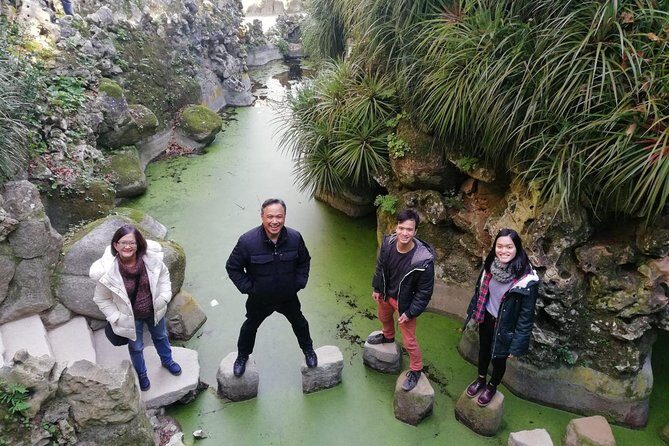
The tour starts at 11:00 am at Jardim Correnteza, Alameda Combatentes da Grande Guerra 11, in Sintra. It ends at Valverde Sintra Palácio de Seteais, at R. Barbosa du Bocage 8.
That start time can be a plus if you like to get your big sights done earlier. It also fits the rhythm of Sintra’s most visited spots, which often draw crowds later in the day.
And the group size matters. With a maximum of 15 travelers, you’re less likely to get lost in a mob situation, and it’s easier for your guide to point out details while you’re still close enough to see them.
Quinta da Regaleira: symbols, gardens, and tunnels in one stop
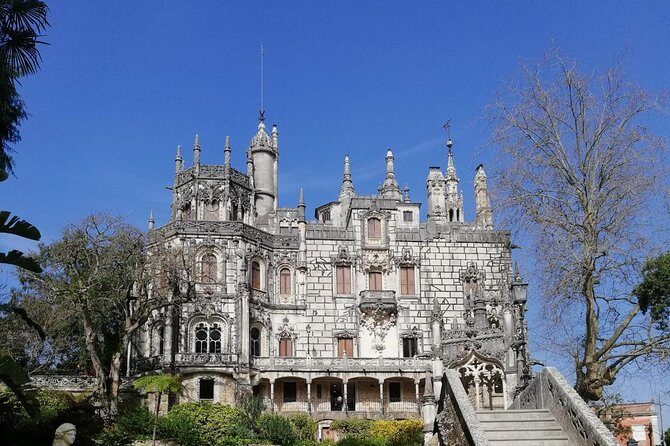
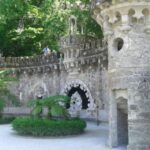
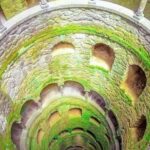
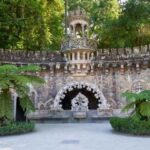
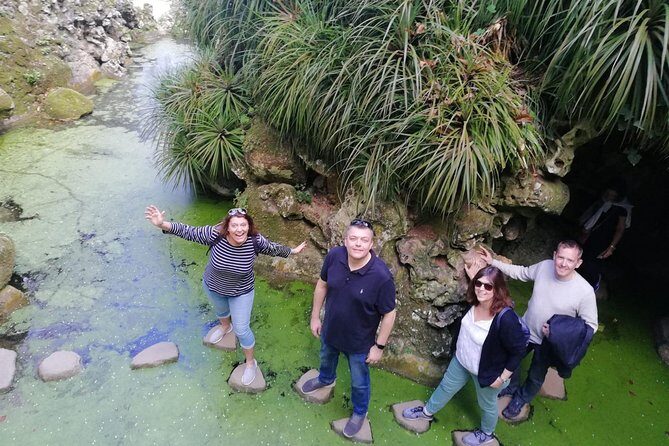
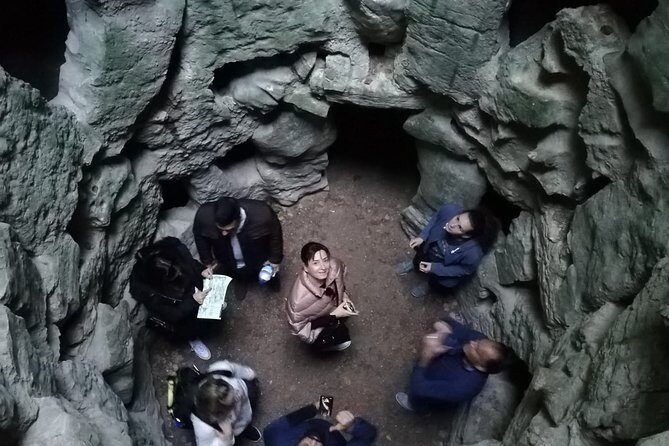
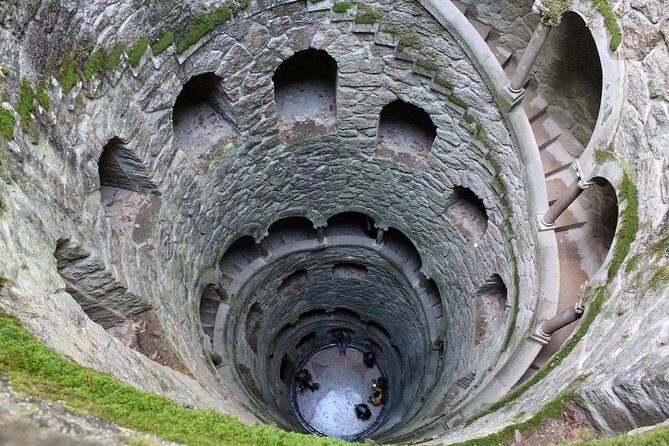
Quinta da Regaleira is the kind of place you remember because it feels layered. The grounds are huge, the landscaping spans plants from around the world, and the design includes tunnel connections that move you between areas in a way that feels intentional.
What makes this stop especially interesting is the mix of influences your guide connects together. You’ll hear about the Templars, the Rose Cross, the Order of Christ, and Masonry—threaded into the way the site is laid out and interpreted. Even if you don’t read every symbol the same way, this is the kind of context that helps your brain stop treating the estate as random fantasy scenery.
What to expect in your time here: the stop is about 10 minutes. That’s not a full, slow wander through every corner, so your best move is to focus on the big visual motifs your guide calls out first. Think of it as a “get oriented, then enjoy the detail” stop.
One practical note: admissions are not included here, so have your entry plan ready before you arrive at this point in the walk.
Sintra National Palace and the Moorish-to-Portuguese blend
Next comes Sintra National Palace, described as the oldest palace in Sintra. It was originally built during Moorish rule in the 8th century, and later Portuguese kings favored it.
This stop is a great example of why Sintra feels like it never fully commits to one style. The palace shows influence from different architectural currents, including Gothic and Manueline. That blending can look like visual confusion if you don’t have a framework; with a guide explaining the timeline, it turns into a clear pattern.
The stop is about 15 minutes, which is long enough to get past the initial “wow” and start seeing the specific style cues. Again, admissions are not included, so treat this as a ticketed highlight that you should plan for financially as well as on your schedule.
Other walking tours we've reviewed in Sintra




Castelo dos Mouros: the view plus the timeline

Castelo dos Mouros was built by the Moors in the 8th century to protect Sintra. Later, it was refurbished in the 19th century by King Fernando II.
So you get two layers here: the original defensive purpose and the later royal “upgrade.” That’s a good reminder that castles aren’t only ancient structures; they also get rewritten by whoever cares for them next.
Your time here is about 10 minutes. With a stop like this, I like to use the guide’s framing to avoid getting stuck in one mode. You can look at the stone and the fortifications, but also keep the question in mind: who built it, who repaired it, and why would a later king care?
Admissions are not included for this stop, so check entry plans in advance.
National Palace of Pena: the multi-style wow-factor stop
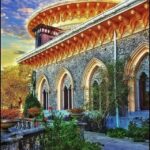
If you only had room for one ticketed stop, Pena Palace is the one your route is built around. It was built by King Fernando II in the 19th century and is famous for its mix of influences, including Neo-Manueline, New-Gothic, Neo-Renaissance, and Neo-Islamic.
It’s also one of the 7 wonders of Portugal, which is a label people repeat, but you’ll feel the meaning once you’re there. The point isn’t just that it looks dramatic. It’s that the design intentionally pulls from multiple traditions, making it feel like architecture built from a stack of different stories.
Your allotted time is about 15 minutes. That’s enough to catch the key “style directions” your guide highlights, but not enough for a slow, full-immersion visit. If you want to go deeper, you’ll do that after the guided segment.
Admissions are not included here, so budget for it as a core part of your day.
The free stops that make the tour feel like Sintra, not a checklist
After the big ticket stops, the route shifts. And that’s where the tour gets more fun for me, because it starts to look like real town life rather than only royalty.
You’ll spend a short visit at the Camara Municipal de Sintra, a good example of Neo-Manueline style in the city. Then there’s Fonte Mourisca, built in the 20th century to remember Moorish fountains from the Arabic world. This one is brief, about 5 minutes, but it’s a useful reminder: the Moorish influence isn’t only in ancient ruins. It shows up in later recreations, too.
Then comes the Anjos Teixera Museum. It’s noted as the first open-air museum in Portugal. Again, you won’t have hours here, but the concept matters: you’re seeing a museum format designed for the outdoors, not only inside walls.
Casa Piriquita and the queijadas connection to King Carlos I
No Sintra walking plan feels complete without a pastry stop. Casa Piriquita is famous for making queijadas, with a link to King Carlos I in the late 19th century, and it’s still in business today.
Your time here is about 15 minutes. That’s enough to grab something, take a breather, and keep your energy for the final religious and historic stops.
The value of this stop isn’t only taste (though it’s hard to beat a classic). It’s context. When a shop has a story tied to the monarchy and has stayed open since that era, it helps you understand that Sintra’s identity isn’t only in palaces—it’s also in food, daily habits, and the businesses that last.
São Martinho, the Lawrence Hotel, and Valverde’s grand finish
Next up is Igreja de Sao Martinho, the parish of Sintra said to be built after the conquest of Sintra by King Afonso Henriques in 1147. Your guide gives this a timeline connection, so the church isn’t just another old building in a pretty street scene.
Then you’ll pass the Lawrence Hotel, listed as the oldest hotel in the Iberian Peninsula. Even if you don’t go inside, just having it pointed out changes how you see the area. It frames Sintra not only as a medieval setting, but also as an early destination for travelers who wanted comfort.
Finally, the tour ends at Valverde Sintra Palácio de Seteais. It was built in the 18th century and now holds a luxury hotel. The stop is about 10 minutes, and by this point, you’ll likely feel the route click into place: Moorish foundations, Portuguese royal transformation, and later-era reinvention all blending into one walking day.
Who should book this tour (and who might want a different plan)
This is a great fit if you want structure without spending all day on buses. The 2h30 length, small group size, and English guiding make it workable for people who want the highlights and also want to understand what they’re seeing.
It’s also a smart pick if you’re planning to visit one or two palaces anyway. This tour gives you context for all the ticketed stops, which can make your self-guided time afterward more rewarding.
If you hate the idea of paying separate admission fees for the biggest landmarks, then this may feel a little expensive once you add entry tickets. But even then, the guide time is the part you can’t easily replicate on your own without research.
Should you book the Sintra Walking Tour: The Portuguese Fairytale?
I’d book it if you want a fast, organized way to connect Sintra’s major palaces and fortifications to the stories behind them. The strongest part for me is how the tour uses context—symbols, timelines, and architectural blends—so the day feels like one coherent journey rather than random stops.
Before you go, plan for separate admission tickets at the big four sites, and keep your expectations aligned with the pacing: you’re sampling, not doing a full slow museum marathon.
If that sounds like your style, this is excellent value at $3.60, especially with a professional guide and a group capped at 15.
FAQ
Where does the tour start and end?
It starts at Jardim Correnteza, Alameda Combatentes da Grande Guerra 11, 2710-569 Sintra, Portugal. It ends at Valverde Sintra Palácio de Seteais, R. Barbosa du Bocage 8, 2710-517 Sintra.
What time does the tour begin?
The start time is 11:00 am.
How long is the Sintra walking tour?
It’s about 2 hours 30 minutes.
Is the tour offered in English, and do I receive a mobile ticket?
Yes, the tour is offered in English. You’ll receive a mobile ticket, and you’ll get confirmation at booking time.
How big is the group?
The tour has a maximum of 15 travelers.
Are admission tickets included for the palaces and castle?
No. Admission tickets are not included for Quinta da Regaleira, Sintra National Palace, Castelo dos Mouros, or the National Palace of Pena.
Are any stops free to enter?
Yes. The Camara Municipal de Sintra and Fonte Mourisca are free, as are the Anjos Teixera Museum, Casa Piriquita, Igreja de Sao Martinho, Lawrence Hotel, and Valverde Sintra Palácio de Seteais.
What is the cancellation policy?
You can cancel for a full refund up to 24 hours before the experience’s start time. If you cancel less than 24 hours before, the amount paid is not refunded.
What happens if weather is bad or the minimum number of travelers isn’t met?
If it’s canceled due to poor weather, you’ll be offered a different date or a full refund. If the minimum number of travelers isn’t met, you’ll get a different experience/date or a full refund.