REVIEW · SINTRA
Climbing Experience in Sintra
Book on Viator →Operated by Discover The Nature - Outdoor Events · Bookable on Viator
Sintra gets wilder when you’re tied in and learning fast. This climbing initiation at Penedo da Amizade turns the Serra de Sintra Natural Park into a hands-on adventure right near Lisbon, and you start with the basics before you get to the real action.
I really like how much calm coaching you get—especially from Marco, who explains things in detail and happily repeats key steps—so your first rope experience doesn’t feel chaotic. I also like that the session is built around doing the skills, not just watching, with action moments that include rapel and other descent moves while you stay in control.
One thing to consider: this experience depends on good weather, so if conditions aren’t right you’ll need to be flexible with dates, and it’s still a physical outdoor activity (not a quick stroll).
In This Review
- Quick hits for climbing in Sintra
- Why Penedo da Amizade is such a fun Sintra climbing base
- The 4-hour flow: what your morning is actually like
- Gear and safety: helmet, harness, rope, and patient instruction
- Getting from the meeting point to the rock
- Learning the basics before the action
- Rapel moments and the free-fall element
- After descent: the short rock climb back to the vehicle
- Views in Sintra: what you may notice from the rocks
- Who this is best for (and who should think twice)
- Price and value: $94.63 for a guided rope experience
- Making it work with the rest of your Sintra day
- Should you book this Sintra climbing initiation?
- FAQ
- Where does the Sintra climbing experience start?
- What time does the experience begin?
- How long is the climbing initiation in Sintra?
- What’s included in the price?
- Is the tour offered in English?
- Do I need lunch or dinner included?
- What is the cancellation policy?
Quick hits for climbing in Sintra
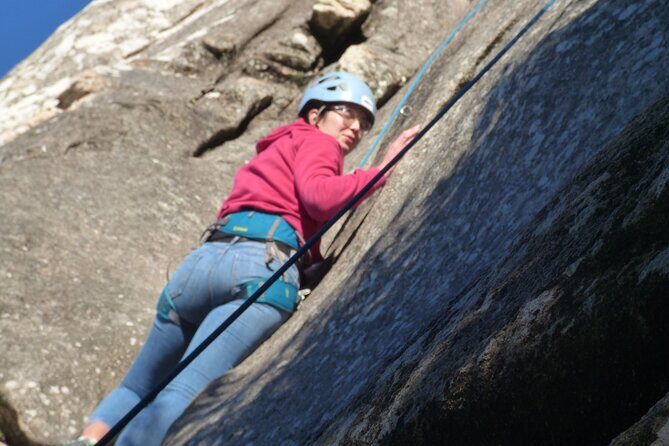
- Penedo da Amizade: a focused place to learn real rope skills in the Serra de Sintra Natural Park
- Small group size (max 15): enough attention for beginners without feeling crowded
- Safety kit included: helmet, harness, rope, plus bottled water to keep the morning smooth
- Marco’s teaching style: detailed explanations, patience, and repeating the steps when needed
- Big moments in a short time: rapel plus a free-fall element reported by participants
Why Penedo da Amizade is such a fun Sintra climbing base
Sintra is famous for palaces and photo stops, but the Serra de Sintra Natural Park is the part that feels like a playground for adventure. This climbing initiation is set at Penedo da Amizade, which is a practical choice if you want a guided session focused on technique, not wandering around hoping you find the right spot.
The timing also helps. You’re looking at a session of around 4 hours, and Sintra is only about 30 minutes from Lisbon, so you can do a full adventure morning and still keep your day open for other sights. That makes this a smart option if you want something active without losing the rest of your trip to travel and long tours.
If you're still narrowing it down, here are other tours in Sintra we've reviewed.


The 4-hour flow: what your morning is actually like
The day starts with a 9:00 am meet-up at Estrada da Pena 2, 2710-551 Sintra, Portugal, and it ends back at the same meeting point. That out-and-back setup matters more than you’d think. It means you can plan the rest of your day without guessing how long it’ll take to get back, and you don’t have to worry about logistics at the end when you’re tired.
With a maximum of 15 travelers and instruction in English, it also stays manageable. You’ll generally get more attention during practice because the group isn’t huge. And since it’s designed as an initiation, the pacing should feel structured: learn the basics, then apply them, then repeat the steps until they click.
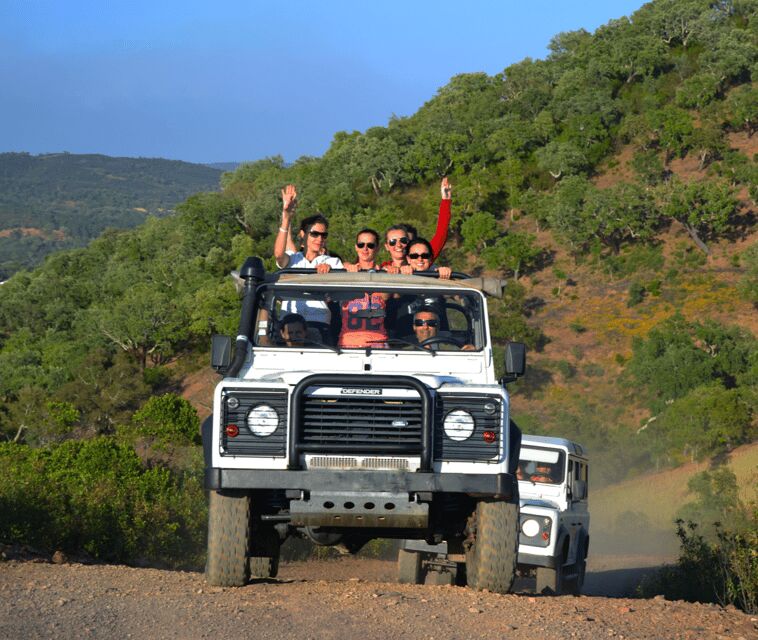
One detail that stands out from participant reports: the session often includes a short jeep ride before you start climbing work. After that, you’ll walk through the area and reach the rock zone where the real rope skills happen. Expect a mix of movement—some hiking on the way in, and then the technical part once you’re at the climbing area.
Gear and safety: helmet, harness, rope, and patient instruction
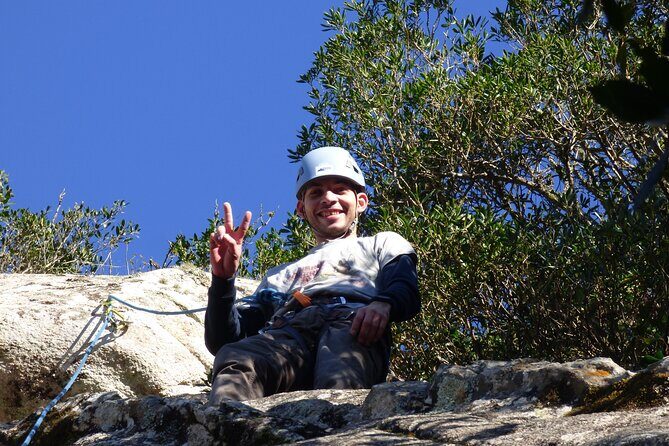
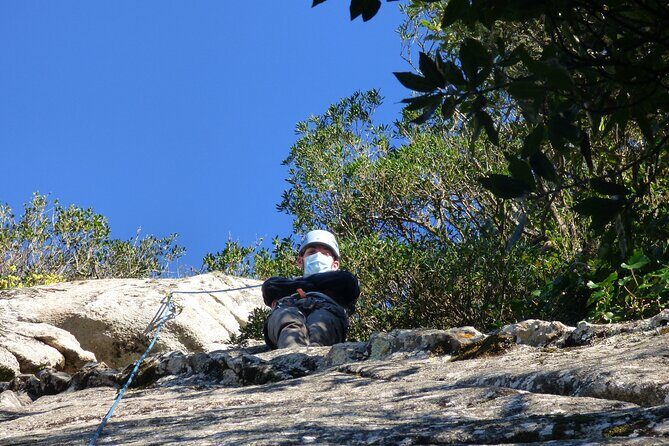
You don’t need to show up with climbing equipment. The experience includes a helmet, harness, rope, and bottled water. For a first-timer, that’s a big value point: you avoid rental hassle and you spend your energy on learning rather than figuring out gear.
Safety also seems to be the center of how this is taught. In the feedback I’m drawing from, people consistently felt super safe and supported by the instructor. The big theme is not just that the safety checks are done, but that the instructor takes time to explain what’s happening and why.
Marco is specifically mentioned as an attentive guide who responds quickly, explains in detail, and repeats things when you need another pass. One participant even notes that the instruction included how to provide safety for another climber—so you don’t just learn what you personally do, you also learn how good belay or partner safety works in practice.
Getting from the meeting point to the rock
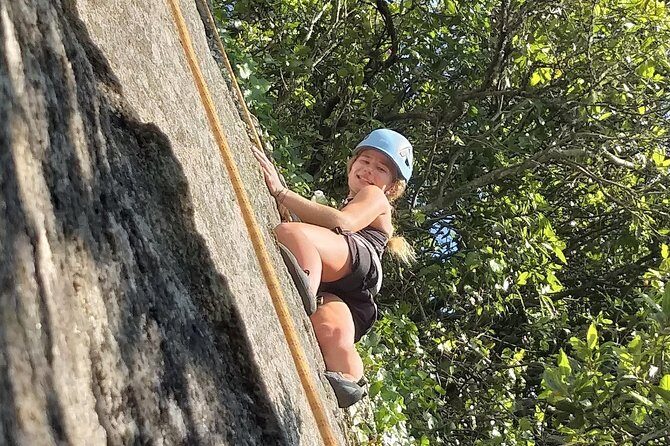
You’ll start at Estrada da Pena 2, then transition into the Serra de Sintra setting. Reports describe a small jeep ride followed by a walk through the hills toward the climbing area. This is a good structure for beginners because it breaks the effort into phases: you warm up while moving toward the rock, then you focus on skills once you arrive.
The timing matters here. If you’re doing this as a Lisbon day trip, you’ll be glad the climbing session is early and concentrated. By the time you’re done, you can go directly into sightseeing mode without feeling like you spent the whole day commuting or waiting around.
The walk itself also helps you feel connected to the place. Sintra’s natural areas have lots of nooks and viewpoints, and this format gives you time to look around without losing the main goal: learning to climb safely.
Learning the basics before the action
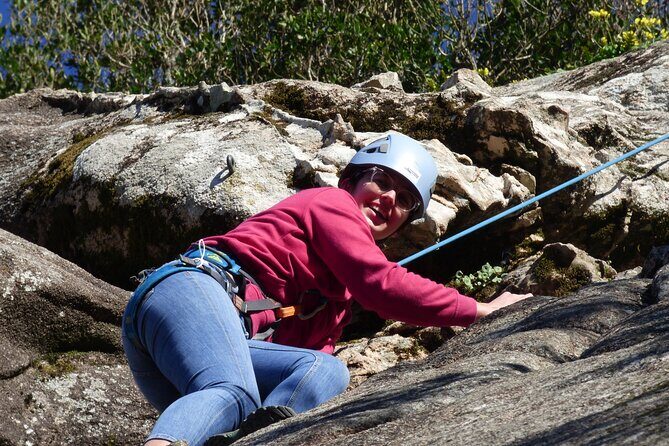
This is sold as a climbing initiation, so the instruction is built around fundamentals. The goal is to help you understand the basics of rope work and movement before you’re asked to do the more intense parts.
That matters because the confidence shift is real. If you’ve never had harness-on, rope-layed, anchor-connected moments, it can feel odd at first. A good initiation course makes those steps feel normal. And from the way participants describe the teaching, the emphasis is on clarity and calm repetition.
You’ll also get instruction on how to manage safety around other climbers. That one detail is underrated: it can turn the experience from a one-off thrill into actual learning you can carry forward to future climbing or rappelling activities.




Rapel moments and the free-fall element
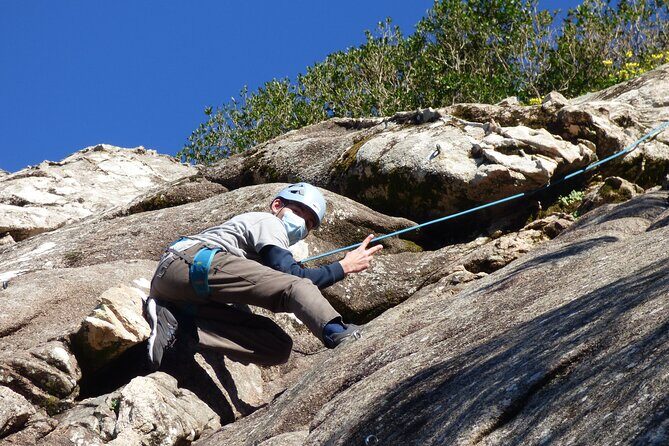
If you’re coming for the adrenaline, this is where it shows up. Participants describe descending in rapel and also mention a free-fall component. That combination is why people remember the session: you’re not only learning technique, you’re getting to test yourself and feel what it’s like to control your descent with support.
What I like about this style is that it’s not random fear. It’s framed as training. The instructor work you get in the beginning should help you understand the mechanics before you reach the point where your brain wants to panic.
Just keep expectations honest: rapel and free-fall are exciting, but they still require focus. If you know you struggle with heights or losing control, tell the team early. With good instruction, you can still participate, but you’ll want your comfort level to be part of the plan from the start.
After descent: the short rock climb back to the vehicle
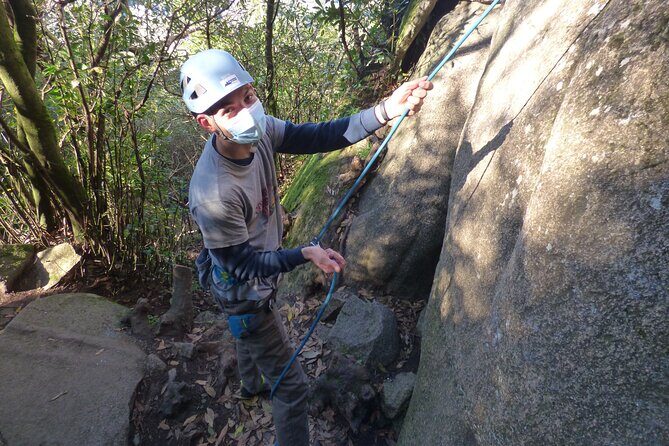
One of the more memorable details from participant feedback is the requirement to climb rocks to get back to the car at the end. That means the day doesn’t end the second you finish a descent. You’ll still have a bit of physical problem-solving while you move back through the area.
Why this is a plus: it keeps the session feeling like one continuous skill-building workout rather than a sequence of separate thrills. And if it’s your first contact with rock climbing, it helps you build a connection between what you learn on the rope and how your feet and body move on rock in general.
If you’re only thinking about the exciting parts, this extra climbing stretch is the reminder that you’re doing an outdoor activity, not sitting in an observation area.
Views in Sintra: what you may notice from the rocks
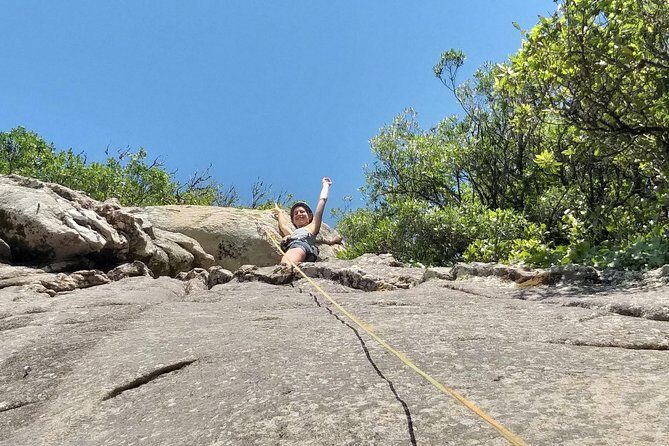
Sintra has big-name sights, and people report seeing the kinds of views you hope for—especially toward major landmarks such as Palácio da Pena, Quinta da Regaleira, and the Vila de Sintra. Even if your attention is mostly on your harness and foot placement, the scenery can still land during pauses and transitions.
This is one reason I think the setting works so well for an initiation. You don’t have to choose between action and atmosphere. You get the instruction and the thrill, and you still get those Sintra moments that make you feel like you’re in the right place.
Who this is best for (and who should think twice)
This experience is listed as accessible from age 10, and it says most travelers can participate. That tells me the course is designed with real beginners in mind, as long as you can handle basic physical movement and follow instructions.
You’ll likely enjoy it most if:
- it’s your first contact with rock climbing or rope skills
- you want hands-on learning with calm coaching
- you like adventure that includes both technique and adrenaline
You might want to think twice if:
- you’re not comfortable with heights or controlled descent
- you’re traveling during a period where weather might be unreliable (this activity requires good weather)
Price and value: $94.63 for a guided rope experience
At $94.63 per person for about 4 hours, the pricing makes sense when you look at what’s included. You’re getting helmet, harness, rope, bottled water, and guided instruction in English. For a first-time climbing experience, those inclusions reduce the usual hidden costs and friction of gear.
The small group size (up to 15) is also part of the value. More attention per person usually means better learning and fewer delays. And if you’re comparing to doing rope skills on your own, you’re paying for safety systems, setup, and expertise—not just a place to stand.
One more value note from participant reports: instructors shared photos the same day in at least one case. That’s not listed as a formal inclusion, but it’s a nice perk if it happens during your session. Either way, the real value is the instruction time and the chance to do the skills rather than just talk about them.
Making it work with the rest of your Sintra day
Because it’s a morning activity that returns you to the meeting point, it’s easy to pair with other Sintra plans. If you want palaces, neighborhoods, and viewpoints, this climb can be your active start.
Since you’re near Lisbon (about 30 minutes away), you can also plan this as a half-day adventure when you don’t want a full day of travel. Just keep some buffer for post-climb rest—rapel and rope work are physical in a way you might not expect if you only imagine the climbing part.
Should you book this Sintra climbing initiation?
I think you should book if you want an organized, beginner-friendly way to learn rope basics in a place that feels like it belongs on a postcard—and you also want the action. The consistent feedback on safety, Marco’s calm instruction, and people describing how they felt supported makes this a strong choice for first-timers.
Skip or reconsider if you’re mainly after passive sightseeing, or if weather in your travel window is likely to be rough. Because it needs good weather, your plans should include a bit of flexibility.
If you’re ready for a hands-on morning, this is the kind of experience that leaves you with more than photos. You’ll leave with a real sense of what you can do when you follow the steps, trust the system, and move one controlled move at a time.
FAQ
Where does the Sintra climbing experience start?
The tour starts at Estrada da Pena 2, 2710-551 Sintra, Portugal.
What time does the experience begin?
The start time is 9:00 am.
How long is the climbing initiation in Sintra?
It runs for about 4 hours.
What’s included in the price?
Helmet, harness, bottled water, and rope are included.
Is the tour offered in English?
Yes, the tour is offered in English.
Do I need lunch or dinner included?
No. Dinner and lunch are not included.
What is the cancellation policy?
You can cancel for a full refund up to 24 hours before the experience’s start time. The experience requires good weather, and if it’s canceled due to poor weather, you’ll be offered a different date or a full refund.