REVIEW · SINTRA
Sintra: Hispanic Moorish Tile Workshop
Book on GetYourGuide →Operated by Estudio Lazuli - Artes e Eventos, Lda. · Bookable on GetYourGuide
Tile-making in Sintra beats souvenir shopping. In just two hours, you make a tile using clay and molds, then paint a second one with colored glazes for a real, hands-on take on Portuguese azulejos.
I like that the workshop pairs making with meaning. You learn the traditional Aresta decoration technique of Islamic influence, and you get a real choice of motifs, not just a pre-made design on autopilot. The studio run by Estudio Lazuli is set up for a small group of up to 8, so the instructor can guide you as you work.
One thing to plan for: you won’t usually walk out with a finished tile the same day. The painted tile has to be fired, and for the U.S. right now, mailed shipping from Portugal is restricted, so you’ll need pickup in 2–3 days or a courier option to your hotel.
In This Review
- Key things I’d circle on your Sintra tile class planner
- A Sintra workshop that turns azulejos into something you understand
- The Aresta technique and Hispano-Moresque context you’ll actually use
- What you make: clay + mold, then one glazed tile that gets fired
- How the 3pm to 5pm session typically runs in the studio
- Step 1: get your bearings and pick your motifs
- Step 2: clay and mold tile-making
- Step 3: glazing and painting your chosen design
- Step 4: decide pickup vs delivery
- Picking designs without second-guessing yourself
- Getting your fired tile: pickup in 2–3 days or courier help
- For most situations: pickup is the simplest option
- Shipping to the U.S. is temporarily restricted
- Price and value: why $58 can be more satisfying than a souvenir tile
- Who this workshop suits best (and who should skip it)
- Should you book the Sintra Hispanic Moorish Tile Workshop?
- FAQ
- What time is the workshop in Sintra?
- How long is the experience?
- How much does it cost?
- What will I make during the workshop?
- Do they fire the tile after class?
- When can I pick up my finished tile?
- Can they ship my tile home?
- Is the instructor English-speaking?
- How big is the group?
- Is this workshop suitable for young children?
- Is transportation or food included?
Key things I’d circle on your Sintra tile class planner
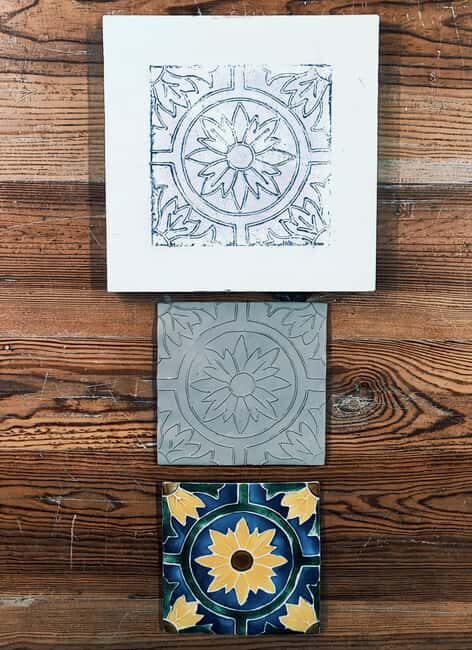
- Clay + mold tile-making that feels practical, not just decorative
- Aresta technique with Islamic influence, explained as you work
- Colored glazes on a tile designed by you, not assigned to you
- Small group size (up to 8), which keeps the pace calm and personal
- Firing service included, with pickup later or courier handling when mailing is limited
- Motif choice from a wide selection of patterns for both molds and tiles
A Sintra workshop that turns azulejos into something you understand
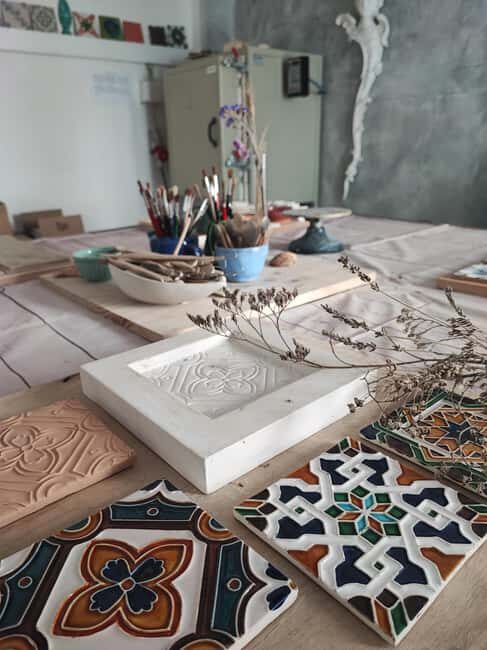
If you’ve been wandering Lisbon and Sintra looking at blue-and-white tilework on walls, churches, and palaces, this is a smart way to connect the dots. This Hispanic Moorish tile workshop is built around one core idea: you’re not just watching tile art. You’re making decisions, choosing patterns, and using the same kinds of tools that create those iconic geometric looks.
The format is compact: 3pm to 5pm in the studio in Sintra. That timing is great if you’re doing Sintra as a half-day from Lisbon, because you can explore the town first and still land in the workshop with energy left.
A few more Sintra tours and experiences worth a look

The Aresta technique and Hispano-Moresque context you’ll actually use
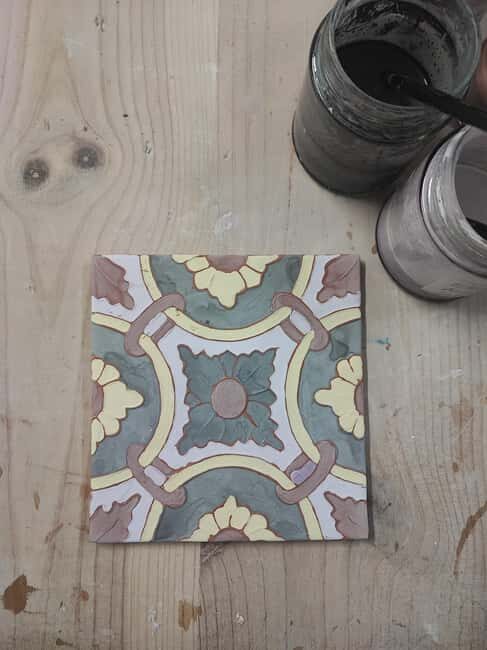
The history here isn’t treated like trivia. You learn how Hispanic Moorish tile design grew from Islamic influence, and how that style became known through the Hispano-Moresque tradition that spread from Spain in the 15th century.
The big technique name you’ll hear is Aresta. In practical terms, Aresta is about crisp, structured decoration—edges, boundaries, and geometric rhythm. When you’re painting, that matters because it helps you think in outlines and pattern sections instead of trying to freehand everything.
You’ll also get a sense of why Portuguese tilework (the azulejos you’ve been spotting) loves symmetry and repeatable shapes. Once you’ve handled the molds and painted inside the motif structure, those walls of patterned squares stop looking random. They start looking engineered.
What you make: clay + mold, then one glazed tile that gets fired
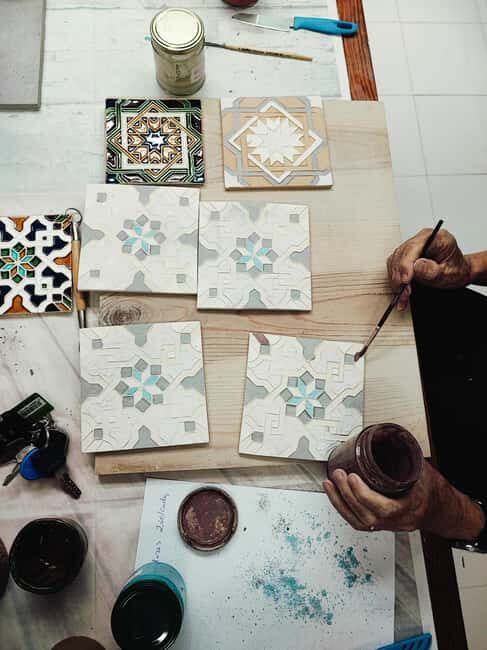
This isn’t a class where you just decorate a ready-made tile and call it done. You’ll do two separate tile moments:
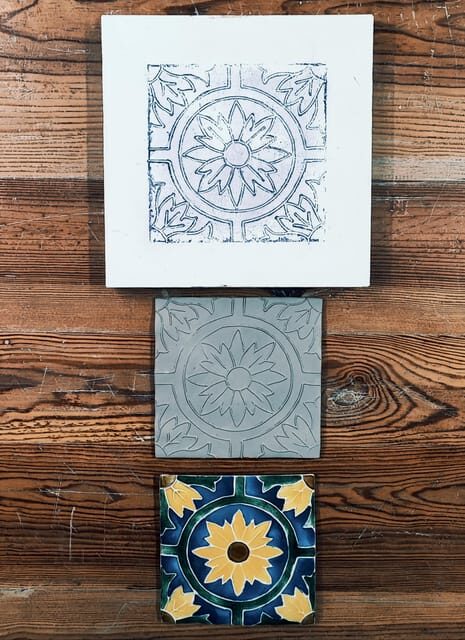
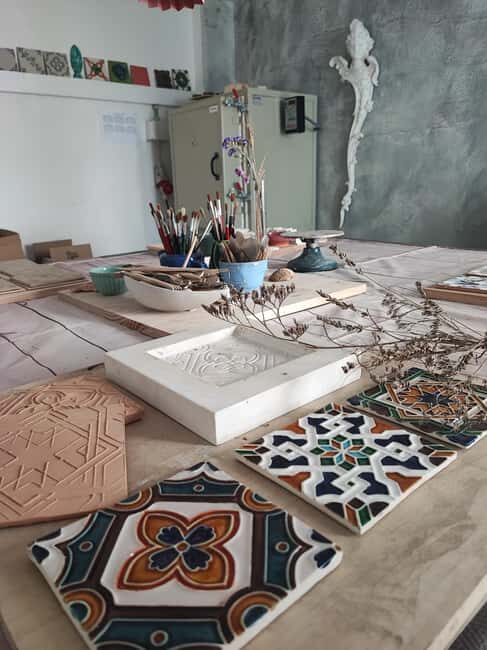
First, you’ll craft a tile with clay and a mold. That gives you the tactile feel of tile-making—pressing, shaping, and committing to a pattern structure early on.
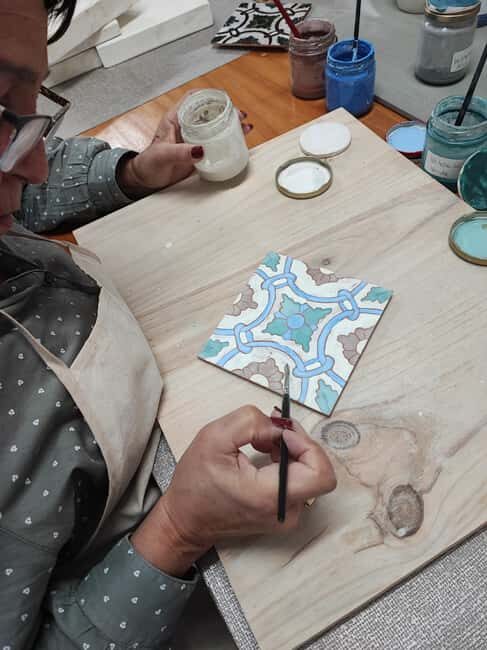
Then you’ll paint another tile using colored glazes. This is the satisfying part for most people, because you’re selecting motifs and putting color into the geometric design. The workshop includes one painted tile as the finished keepsake. Your painted tile stays at the studio to be fired after class.
If you’re the type who likes a clear outcome, this format is reassuring: you know exactly what becomes your final product. You’re not leaving with a wet craft project that still needs hours of personal work at home.
How the 3pm to 5pm session typically runs in the studio
The schedule is short, but it’s organized. Expect a steady flow instead of long lectures.
Step 1: get your bearings and pick your motifs
You’ll start with an explanation of the tile tradition and the technique you’ll use. Then you’ll move into pattern selection—choosing motifs from a wide range for both molds and the tile you’ll paint.
In the studio, the instructor (often referenced by guests as Dina, and sometimes spelled Aldina/Alinda) keeps things moving and friendly. That matters because tile work rewards patience, not speed. You want time to line up your choices without feeling rushed.






Step 2: clay and mold tile-making
Next comes the clay-and-mold part. This is where you see how the pattern base is formed. You’re not just painting later; you’re helping create the tile’s structure.
Step 3: glazing and painting your chosen design
After the mold step, you’ll paint a tile with colored glazes. This is where Aresta’s structured look becomes your guide. You’ll be working within motif boundaries, building the geometric feel one section at a time.
Step 4: decide pickup vs delivery
At the end, you’ll plan what happens to your finished tile. The painted tile is fired in the studio, and afterward you can pick it up later or arrange shipping/delivery depending on where you’re going.
Picking designs without second-guessing yourself
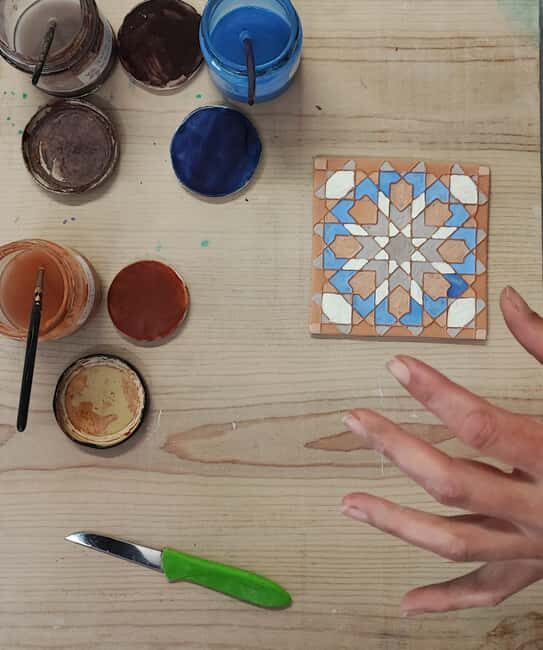
One of the best parts of this workshop is that you don’t have to settle for a single template. You can choose from a wide selection of motifs, and that makes a huge difference.
When you’re standing in front of pattern options, it’s easy to overthink. My practical advice: choose a motif that already looks balanced on the board. The goal isn’t to create a brand-new art style; it’s to end up with something that matches the tile tradition you came to learn.
Also, lean on the instructor while you’re deciding. The feedback here has been consistent: Dina (and the studio team) are kind, patient, and focused on helping you get satisfying results, even if you don’t consider yourself an art person.
Getting your fired tile: pickup in 2–3 days or courier help
Here’s the part you should treat as important, not annoying: your finished tile does not come out of the kiln while you wait. It needs firing, then time to be handled safely.
For most situations: pickup is the simplest option
The studio says the fired tile will be ready for pickup within 2–3 days.
Shipping to the U.S. is temporarily restricted
Due to current U.S. rules affecting duty-free de minimis shipments, Portugal’s postal services have temporarily restricted sending parcels to the U.S. That means mailed shipping for painted tiles is not available right now.
You still have options:
- Your tile will be finished and ready for pickup in 2–3 days.
- If you can’t collect it in person, the studio can arrange delivery to your hotel via courier (extra fee applies).
- If neither works, they’ll keep it stored at the studio until international shipping becomes available again.
If you’re traveling with limited time in Sintra, plan your hotel pickup or courier needs early. This is the one logistical point that can change your experience from smooth to stressful.
Price and value: why $58 can be more satisfying than a souvenir tile
At $58 per person for a two-hour workshop, you might think: is that just “paying for an activity”? But the value is in what’s included and what you’re taking home.
You get:
- All materials and equipment
- Instruction (English)
- The clay-and-mold making time
- Glazing and painting time
- Firing service
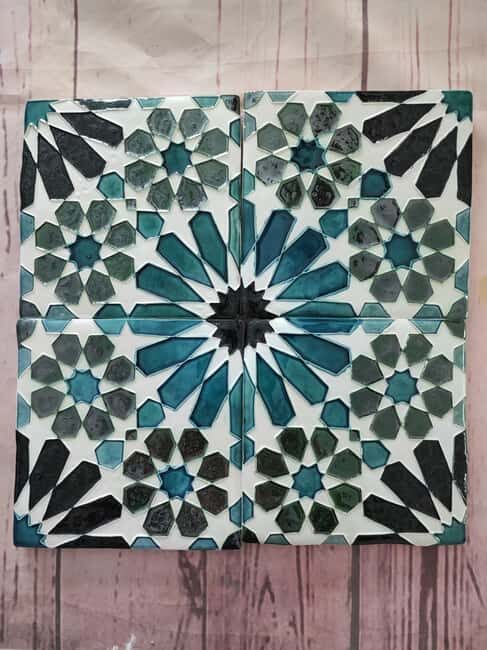
- One painted tile as the finished keepsake
- Option to pick up later or arrange shipping/delivery
A store-bought souvenir tile looks great on a shelf, sure. But handmade tilework has a different feel because you made the choices that shaped it. You’ll also understand the geometric logic behind what you see around Lisbon and Sintra, which makes the experience stick in your brain long after the tile is wrapped.
The one cost consideration is not the workshop price—it’s what happens after firing. Shipping costs aren’t included, and with the U.S. situation currently, you’ll likely pay for courier if you don’t plan to pick up. Still, you’re not paying an extra “materials and firing” fee on top of the class. That’s already built in.
Who this workshop suits best (and who should skip it)
This is a great fit if you want:
- A calm, hands-on craft that doesn’t require prior experience
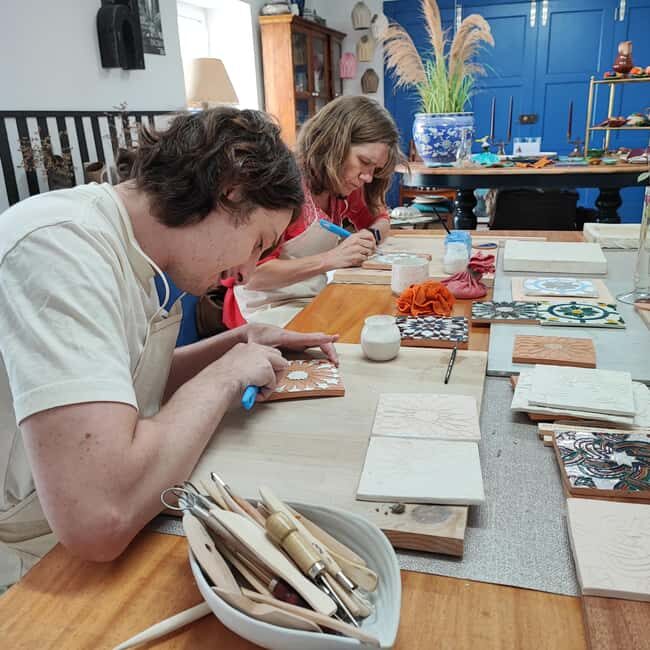
- A small group setting (up to 8 participants)
- A cultural connection between Portugal’s azulejos and Islamic-influenced Hispanic Moorish design
- An actual finished object (after firing), not just a photo opportunity
It may be less ideal if:
- You need a finished tile the same day. You’re looking at later pickup or delivery.
- You’re traveling with almost no room to store a fragile item until it’s fired and handled.
- You’re traveling with kids under 7, since the workshop isn’t suitable for younger children.
The workshop is also wheelchair accessible, which is a real plus in a craft setting where spaces and tools can be tricky.
Should you book the Sintra Hispanic Moorish Tile Workshop?
If you’re already in Lisbon and planning Sintra anyway, I’d strongly consider this. It’s one of the better uses of travel time because you leave with an object tied to understanding, not just an item tied to spending.
Book it if you:
- Like learning through making
- Want to pick a motif and paint it with colored glazes
- Appreciate the idea of Aresta beyond a quick explanation
- Can handle the timing of pickup in 2–3 days (or you’re ready for hotel courier if you’re in the U.S.)
Skip it if you:
- Can’t wait for firing or don’t have any plan for pickup/delivery
- Get frustrated with any logistics at all
- Are looking for a fast, disposable activity with no lingering commitment
FAQ
What time is the workshop in Sintra?
It runs from 3pm to 5pm in the Studio.
How long is the experience?
The workshop lasts 2 hours.
How much does it cost?
The price is $58 per person.
What will I make during the workshop?
You’ll craft a tile using clay and a mold, and you’ll also paint one tile with colored glazes. The included finished keepsake is one painted tile.
Do they fire the tile after class?
Yes. The workshop includes a firing service for your painted tile.
When can I pick up my finished tile?
You can pick it up later at the Studio, and it’s expected to be ready within 2–3 days.
Can they ship my tile home?
Shipping is offered as an option, but costs are charged separately in the Studio. For U.S. shipments right now, postal mailing is temporarily restricted, so your options are pickup or delivery via courier to your hotel.
Is the instructor English-speaking?
Yes. The instructor is listed as English.
How big is the group?
It’s a small group with a limit of up to 8 participants.
Is this workshop suitable for young children?
No. It’s not suitable for children under 7.
Is transportation or food included?
No. Transportation and food/drinks aren’t included.